The Common Details of Ted Baker's Store Closures
Which Locations Are Affected?
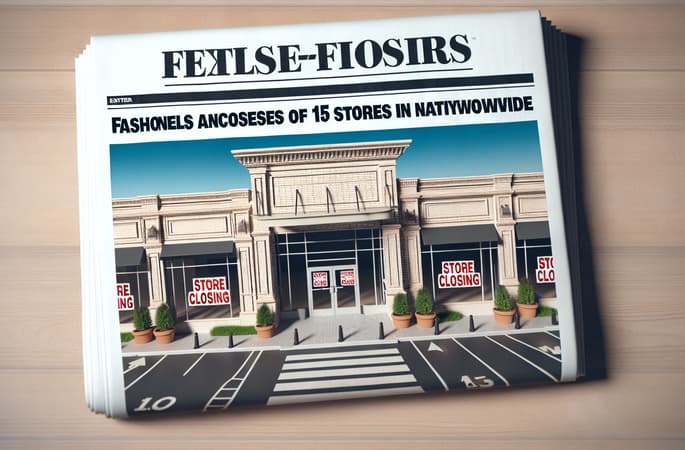
In the wake of recent announcements, fashion enthusiasts and employees alike are feeling the weight of the news that Ted Baker is set to close 15 stores across the country. The specific locations that will face closure are yet to be fully disclosed, with the company expected to release a comprehensive list imminently. These closures represent a significant contraction of Ted Baker's physical retail presence, a move that will undoubtedly reshape the brand's regional footprint. Consumers and staff at these locations are grappling with the realization that their local Ted Baker outlets are on the list of soon-to-be-shuttered stores. This development has prompted widespread concern about access to the beloved British brand's products and the fallout for its retail employees.
Timeline for the Shutdown Process
The closures are not just a distant likelihood; they are fast approaching. Indications suggest that the shutdown process for the affected stores will begin in a matter of days. This tight timeline demands urgent attention from all stakeholders, including employees who must prepare for impending job transitions and shoppers who may seek to visit the stores for one final purchase. The pace of these closures underscores the serious financial pressures that the company is under, prompting quick and decisive action to stem further losses. As the countdown to closure commences, customers may be on the lookout for final sales, even as employees brace for a swift, challenging end to their tenure with Ted Baker.
Impact on Niche Employment
Job Losses Associated with the Closures
The retail landscape has been shaken by the announcement that Ted Baker, the iconic British fashion retailer, will close 15 of its stores. As a direct consequence, approximately 245 employees are set to lose their jobs. This marks a significant reduction in the workforce for a brand that has over the years become synonymous with a particular niche in high street fashion. The employees affected by the closures span various roles, from sales associates to store managers, many of whom possess specialized skills and knowledge in luxury retail service and product curation.
The implications of these closures reach beyond the personal impact on individual employees; they radiate out to the retail employment niche. A reduction in the number of operational stores means fewer opportunities for work within the industry, particularly for those with expertise in luxury and high-quality apparel retailing. This reduced capacity potentially displaces a segment of the workforce with highly specific skill sets, making it challenging for these individuals to find comparable roles within an increasingly competitive job market.
Ted Baker's store closures are reflective of a broader trend in the shifting dynamics of brick-and-mortar retail towards online shopping. For those whose careers have been built around the in-person retail experience, the closures signify a disruption requiring adaptation and potential reskilling to align with market demands. The impact on niche employment is twofold: it represents the end of an era for certain traditional retail roles and acts as a catalyst for reinvention within the sector, pushing professional development and career transitions towards digital retail competencies.
Support for Affected Employees
In light of the job losses, Ted Baker has stated its commitment to providing support for the affected employees. This includes offering redundancy packages that are intended to mitigate the immediate financial impact of these job losses. Additionally, the company is working to facilitate external employment opportunities, career counseling, and emotional support services to aid employees during this transition. Ted Baker is also exploring the possibility of relocating some staff members to its remaining stores or other parts of the business, focusing on retaining talent within the company infrastructure wherever feasible.
Corporate responsibility extends to the support of employees facing redundancy due to store closures, and Ted Baker's approach to this challenge is critical for maintaining its reputation as an employer. Ensuring that former employees land on their feet will be instrumental in shaping the narrative around the closures, not just as a tale of economic necessity, but as one where the human element of business decision-making is not lost. As the store closures proceed, the fashion retailer's support for its niche employment base will be closely watched by industry observers and former employees alike, as well as by jobseekers assessing the retail sector's adaptability and compassion in times of transformation.
The broader retail community and governmental job support agencies also play a crucial role in offering retraining programs, job fairs, and other resources aimed at helping displaced workers find new employment paths. Such collaborative efforts can help mitigate the impact of job losses on the niche employment segment, contributing to a more resilient workforce that can withstand the evolving retail landscape. It underlines the importance of a safety net that extends beyond the walls of the individual businesses and encompasses the entire industry and support system tailored to its unique employment demands.
Underlying Reasons for the Closures
Insolvency Issues Facing Ted Baker
The wave of store closures by Ted Baker has its roots in deeper financial tribulations that the company has been facing. Insolvency concerns have put the fashion retailer in a challenging position, forcing a drastic re-evaluation of its operational strategy. Despite the brand's strong identity and loyal customer base, it has not been immune to the struggles that have beset the retail sector. High street stores, in particular, have found themselves confronting a nexus of rising rents, increasing labor costs, and a shift in consumer behavior toward e-commerce.
These financial strains have been exacerbated by broader economic pressures, including uncertain political climates and fluctuating currency values, which have collectively impacted purchasing power and international trading terms. Ted Baker's insolvency issues can also be partly attributed to specific missteps such as over-expansion without proportionate growth in demand, investment in underperforming locations, and a lack of agility to pivot swiftly in response to market trends. The culmination of these concerns has left the company with no choice but to opt for a leaner, more focused approach to its business model, entailing a considerable reduction in its physical presence.
This retrenchment serves as a sobering reminder that even well-established brands are not invulnerable to the tides of economic change. The financial challenges confronting Ted Baker have called for measures that go beyond simple belt-tightening. It has necessitated a complete overhaul of the way the company thinks about its place in the retail market and how it manages its finances to safeguard against further instability.
Strategies for Company Restructuring
In light of the insolvency issues and the impending closure of stores, Ted Baker is undergoing a strategic restructuring. This process involves a critical look at its portfolio of stores, evaluating each one's performance and potential for success in the current retail climate. The company is identifying underperforming stores whose operational costs no longer justify their continued existence. Consolidation is thus key, with a focus on retaining those stores that demonstrate sustainable profitability or strategic importance to brand visibility.
Restructuring is not limited to brick-and-mortar changes; it also encompasses digital transformation initiatives. Ted Baker is increasing its investment in online platforms and e-commerce capabilities, recognizing the critical role that digital sales channels play in today's shopping environment. The goal is to build a robust online presence that can supplement and, in some cases, replace the foot traffic of traditional retail spaces. This shift will involve leveraging data insights to tailor the online shopping experience, expanding digital marketing efforts, and integrating seamless omnichannel solutions for the consumer.
In addition to operational restructuring, Ted Baker is re-evaluating its product lines, brand positioning, and customer engagement strategies. It is essential for the company to remain relevant and competitive in a fashion industry where consumer tastes and expectations are continually evolving. Part of this strategy may involve collaborations, exploring new markets, or refocusing on core product strengths that resonate with its audience.
The imperative for Ted Baker's successful restructuring will be its ability to balance cost-efficiency with innovation and brand integrity. Ensuring that each decision aligns with the brand's ethos and long-term vision will be crucial as the company navigates through this challenging period. Through these concerted restructuring efforts, Ted Baker aims to emerge from this challenge leaner, more resilient, and with a clear direction for the future.
What's Next for Ted Baker?
Future Plans for Physical and Online Presence
With the news of 15 store closures sending ripples throughout the retail industry, many are asking: What's next for Ted Baker? The company is poised to embark on a transformative journey that balances the reduction of its physical stores with an augmented online presence. Expansions in the digital realm are set to take center stage as the brand pivots to meet the changing consumer landscape head-on, doubling down on e-commerce to capture an increasingly digital-savvy customer base.
While the brick-and-mortar aspect of Ted Baker remains a significant facet of the brand experience, a strategic refocusing will see the company prioritizing key locations and experiential retail concepts. These physical spaces will aim to enhance customer engagement through personalized services and immersive brand encounters that extend beyond mere transactions. In parallel, optimization of the online shopping platform will include a seamless, user-friendly interface, sophisticated data analytics to tailor customer experiences, and enhanced logistics for efficient delivery and customer service processes.
The evolution of Ted Baker's physical and online presence is more than an adaptation; it's a proactive realignment of their sales channels to reflect the preferences of today's consumer. By integrating their digital and in-store offerings, Ted Baker envisages a hybrid model that aligns with the emerging patterns of 'phygital' retail, where the lines between the physical and digital shopping worlds are intentionally blurred to create a cohesive omni-channel experience.
Long-Term Brand Strategy Amidst Closures
The closures are not merely a response to immediate financial pressures but a calculated step in Ted Baker's long-term brand strategy. As the company draws back from underperforming stores, it makes room for strategic growth and brand evolution that keeps consumer relevance at its core. An emphasis on quality, design differentiation, and sustainability will guide product development, tapping into growing consumer consciousness around ethical and eco-friendly practices.
Marketing and branding efforts will pivot to storytelling, building deeper connections with consumers through original content, and leveraging social media and influencer partnerships to reinforce Ted Baker's narrative. The goal is to create a holistic brand experience that resonates with current lifestyle trends, supporting the establishment of a loyal customer community that extends far beyond the point of sale.
At the heart of Ted Baker's long-term strategy is innovation. Whether through the adoption of new technologies, exploring untapped markets, or diversifying product lines, the company is looking to future-proof its business to not only survive the current retail downturn but to thrive in the years to come. With a clear vision and a commitment to adaptability, Ted Baker is setting the stage for a brand revivification that respects its heritage while boldly forging its path forward into the future of fashion retail.